Source Tail Lock Block for Boat Oarlocks, Door Security, and Cylinders
Find and compare 23 tail lock block options including Oarlock models, door locks, and cylinder parts. Buyers can review specifications like material, dimensions, and customization availability from verified suppliers.
Key considerations
Products List






Comprehensive Sourcing Guide
Strategic Sourcing Guide for Tail Lock Block Components
Understanding the Technical Landscape of Tail Lock Systems
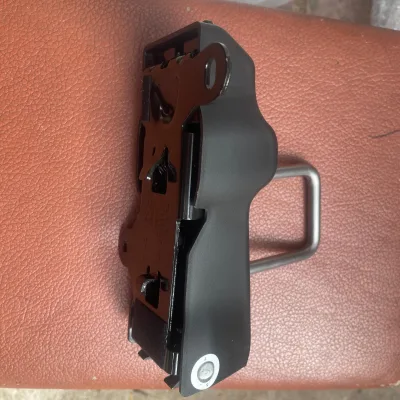
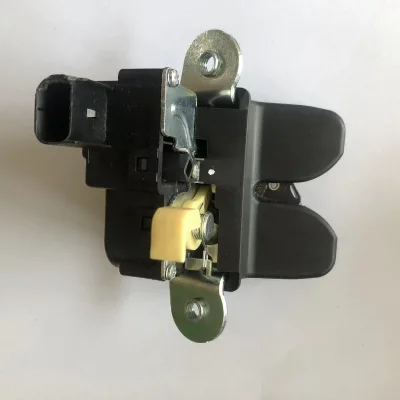
When initiating a procurement strategy for tail lock blocks, buyers must first distinguish between the broad category of locking mechanisms and the specific sub-components that define a "tail lock." In the context of industrial and marine applications, the terminology often overlaps with boat parts, door locks, and heavy-duty lifting equipment. The supplied product data reveals a diverse range of attributes associated with similar identifiers, necessitating a rigorous filtering process. For instance, one set of observations points to a "Tail Bar Cylinder" with a "Tail Bar Lock" standard, constructed from metal and designed for household or bedroom use. Conversely, other data points reference "Boat Parts Oarlock" models with specific dimensions like 200mm in length and 90mm in width, made from brass or PVC.
The technical specifications for a genuine tail lock block must be verified against the intended application. If the procurement is for marine environments, the focus should be on corrosion resistance and rotation capabilities. The observed data indicates a "Rotation Angle" of 360 degrees for certain oarlock variants, which is a critical metric for fluid movement in boat rigging. For industrial lifting applications, the focus shifts to load capacity, where observed data mentions a "Max Load" of 15,000kg and a "Net Weight" of 73.2kg for specific lifting devices. However, for a standard tail lock block used in cabinetry or security, the "Part" designation as a "Lock" and the "Style" as "Modern" are more relevant. Buyers must not conflate the specifications of a heavy-duty chain hoist with a small-scale door lock cylinder. The material composition is equally variable; while some components are listed as "Brass" or "Metal," others are noted as "PVC" or "G80 Alloy Steel." A procurement plan must explicitly define the required material based on the environmental stressors, such as exposure to water, which requires a "Waterproof" rating, or the need for high tensile strength, which demands alloy steel.
Compliance Verification and Certification Standards
Navigating the compliance landscape for tail lock blocks requires a careful examination of the standards cited in supplier catalogs. The provided data lists "CE" as a product standard for certain lifting equipment, which is a mandatory conformity mark for products sold within the European Economic Area. If the tail lock block is intended for use in machinery or equipment that falls under the Machinery Directive, verifying CE certification is a non-negotiable step. However, the data also references "OL-06" and "Tail Bar Lock" as standards, which appear to be internal model numbers or specific product line identifiers rather than universal safety certifications.
Buyers must be cautious when interpreting "Standard Lifting Height" or "Standard" fields that list dimensions like "84inch." These values likely refer to specific product configurations rather than industry-wide regulatory standards. For a tail lock block used in a marine setting, the "Anti-theft Standard: A" mentioned in the data suggests a classification system for security levels, but this is not a globally recognized ISO standard. Instead, it is a proprietary or regional classification. Therefore, the procurement strategy should prioritize verifying that the supplier can provide third-party test reports for the specific application, rather than relying solely on the "CE" or "OL-06" labels found in generic listings. If the component is for a door lock, the "Standard" might relate to fire ratings or burglary resistance, which are not explicitly detailed in the provided text. Consequently, buyers should request documentation proving that the specific batch of tail lock blocks meets the local building codes or maritime safety regulations of the destination country. The "Made in China" origin is a frequent observation, which necessitates a deeper dive into the specific factory's quality management system certifications, such as ISO 9001, to ensure that the "CE" mark is legitimate and not merely a marketing claim.
Cost Drivers and Pricing Structure Analysis
The cost structure for tail lock blocks is influenced by a complex interplay of material costs, customization levels, and order volumes. The observed price range in the market spans from 1 to 1000 USD, a vast disparity that reflects the difference between a single plastic bag-packed oarlock and a heavy-duty industrial lifting assembly. For a standard tail lock block, the primary cost driver is the raw material. Components made from "G80 Alloy Steel" or "Brass" will inherently carry a higher base cost than those made from "PVC" or basic "Metal" alloys. The "Net Weight" of the product, such as the 73.2kg observed for a lifting device, directly correlates with the material cost, whereas a lightweight component like the 320g oarlock will have a significantly lower material footprint.
Customization is another significant factor. The data confirms that "Customization: Available" is a standard offering for many suppliers, allowing for modifications in dimensions, such as the "Chain Diameter" of 10mm or the "Length" of 200mm. However, the same data also lists "Customized: Non-Customized" for other items, indicating that some suppliers offer a hybrid model where standard parts are cheaper, but bespoke engineering incurs a premium. The "MOQ" (Minimum Order Quantity) varies widely, from 1 unit to 5000 units. For a buyer seeking a small batch of specialized tail lock blocks, the unit price will likely be higher due to the setup costs associated with customization. Conversely, ordering at the upper end of the MOQ range, such as 200 PCS or 5000 units, can drastically reduce the per-unit cost. The "Selling Units" field, which notes "Single Item" for some products, suggests that the market supports both retail and bulk procurement, but the "Packing" methods, ranging from "Color Box" to "Pallet," also impact the final landed cost. Logistics expenses for heavy items like the 15,000kg capacity equipment will be substantial compared to lightweight components, and these shipping costs must be factored into the total cost of ownership.
Typical Applications and Operational Context
The versatility of tail lock blocks is evident in the diverse applications observed in the product data. The most distinct category is marine usage, where the "Product Name" is explicitly "Boat Parts Oarlock" and the "Use" is defined as "Inflatable Boats." In this context, the tail lock block serves as a critical interface for oars, requiring a "Rotation Angle" of 360 degrees to allow for efficient rowing without binding. The dimensions provided, such as a width of 90mm and a height of 49mm, are optimized for the ergonomic handling of oars on small vessels. The "Available Oar Diameter" of Max.41mm is a precise specification that buyers must match to their existing fleet equipment.
In contrast, the data also points to security and residential applications. The "Usage" field lists "Household Door Locks, Bedroom, Channel Lock," and the "Part" is identified as a "Lock." Here, the "Tail Bar Cylinder" and "Tail Bar Lock" standards suggest a mechanism designed for securing entry points. The "Style" being "Modern" and the "Electric" attribute being "No" indicate a mechanical solution suitable for residential or light commercial use. The "Age" requirement of ">18 Years" and "Suitable for: Adult" implies that these locks are intended for adult supervision or use, possibly due to the strength required to operate them or safety considerations. For industrial settings, the "Purpose" of "for replace/repair" and the "Condition" of "New" highlight the role of these components in maintenance operations. The "Capacity" of 10,000kg and "Max Load" of 15,000kg suggest that similar locking mechanisms are used in heavy lifting gear, where the "Tail Lock" ensures the safety of the load during hoisting. Buyers must align the application context with the specific product attributes; a lock designed for a bedroom door is not suitable for a marine oarlock, and vice versa.
Supplier Evaluation and Origin Verification
Evaluating suppliers for tail lock blocks requires a focus on the "Place of Origin" and the specific capabilities of the manufacturing facility. The data consistently points to "China" and "Qingdao" as the primary locations of origin. Qingdao is a major port city in China known for its manufacturing base, particularly in hardware and marine equipment. However, the presence of "Made in China" on some listings and "China" on others requires buyers to verify the specific factory location to ensure supply chain transparency. The "Capacity" of 10,000kg listed in the data likely refers to the factory's production capability or the lifting capacity of the equipment they manufacture, rather than the supplier's logistics capacity.
When assessing a supplier, buyers should look for evidence of "Customization" capabilities. The data confirms that customization is available, but the extent of this service varies. Some suppliers offer "Color Box or Wooden Case" packaging, while others use "Pallet" or "Plastic Bag + Cartons." The choice of packaging can indicate the supplier's attention to detail and their ability to handle different order sizes. A supplier offering "Wooden Case" packaging is likely equipped to handle heavier, more fragile, or higher-value items, whereas "Plastic Bag" packaging suggests a focus on high-volume, low-cost items. The "MOQ" of 200 PCS for oarlocks and the range up to 5000 units for other items indicate that suppliers have varying thresholds for engagement. Buyers should verify if the supplier can accommodate their specific order volume without compromising quality. Additionally, the "Condition" of "New" and the "Purpose" of "replace/repair" suggest that the supplier deals in genuine replacement parts, which is crucial for maintaining equipment integrity. Buyers should request samples to verify the "Material" quality, such as the difference between "Brass" and "Metal," and ensure that the "Standard" claimed, such as "CE," is backed by valid documentation.
Quality Control and Long-Term Procurement Considerations
Implementing a robust quality control (QC) strategy is essential for tail lock block procurement, given the wide variance in product attributes. The "Standard" field lists multiple entries, including "CE," "OL-06," and "Tail Bar Lock," which highlights the need for precise verification. Buyers should not assume that a product labeled with a standard meets all requirements; instead, they must request test reports that specifically address the "Waterproof" capability for marine applications or the "Anti-theft Standard" for security applications. The "Net Weight" and "Single Gross Weight" data provide a baseline for QC checks; deviations from these weights can indicate material substitution or manufacturing defects.
For long-term procurement, the "Lead Time" and "Packing" consistency are critical factors. While the data does not explicitly state lead times, the "Capacity" of 10,000kg suggests that suppliers with high production volumes may have shorter lead times for standard items but longer times for customized orders. The "Packing" methods, such as "Color Box/Polybag" or "Plastic Bag + Cartons," must be standardized to prevent damage during transit, especially for components with precise dimensions like the 200mm length. Buyers should also consider the "Condition" of the product; "New" items are preferred for critical applications, but "replace/repair" parts must be verified for compatibility with existing systems. The "Power Source" being "Manual Labour" for some items indicates that the mechanism relies on human operation, which requires durable materials to withstand repeated stress. Finally, the "Application" field, ranging from "Cow" (likely a data error or specific niche use) to "Boat" and "Household," underscores the importance of matching the product to the exact use case. A comprehensive QC plan should include incoming inspection, material verification, and functional testing to ensure that the tail lock blocks meet the specified standards and performance expectations over the long term.
FAQs
What is the maximum load capacity for tail lock blocks?
The maximum load capacity observed for related lifting devices is 15000kg. This specification applies to heavy-duty industrial equipment rather than small marine or household components, so buyers must verify the specific model's rating before use.
Can tail lock blocks be customized for specific needs?
Customization is available for many tail lock block products in the market. Buyers can request modifications to dimensions or materials, though some standard items are listed as non-customized, requiring careful selection based on the supplier's capabilities.
Which materials are commonly used for tail lock blocks?
Common materials include G80 Alloy Steel, Brass, Metal, and PVC depending on the application. Alloy steel is used for high-load lifting, while brass and PVC are found in marine oarlocks and lighter duty components, requiring selection based on environmental exposure.
What is the standard origin location for these products?
The primary place of origin for these products is China, with specific manufacturing hubs in Qingdao. Buyers should verify the exact factory location to ensure supply chain transparency and to assess logistics costs associated with shipping from this region.
How does the MOQ vary for tail lock block orders?
The minimum order quantity ranges from 1 unit up to 5000 units depending on the supplier and product type. Some items like oarlocks have a specific MOQ of 200 pieces, while others allow for single item purchases, affecting the unit price significantly.
Are tail lock blocks suitable for marine environments?
Yes, specific variants like boat parts oarlocks are designed for inflatable boats and feature waterproof ratings. These marine components often include a 360-degree rotation angle and corrosion-resistant materials like brass to withstand water exposure effectively.
What certifications are available for tail lock block products?
Some lifting equipment products carry CE certification, indicating conformity for the European Economic Area. However, other standards like OL-06 or Tail Bar Lock may be internal model identifiers, so buyers must request third-party test reports to confirm safety compliance.